
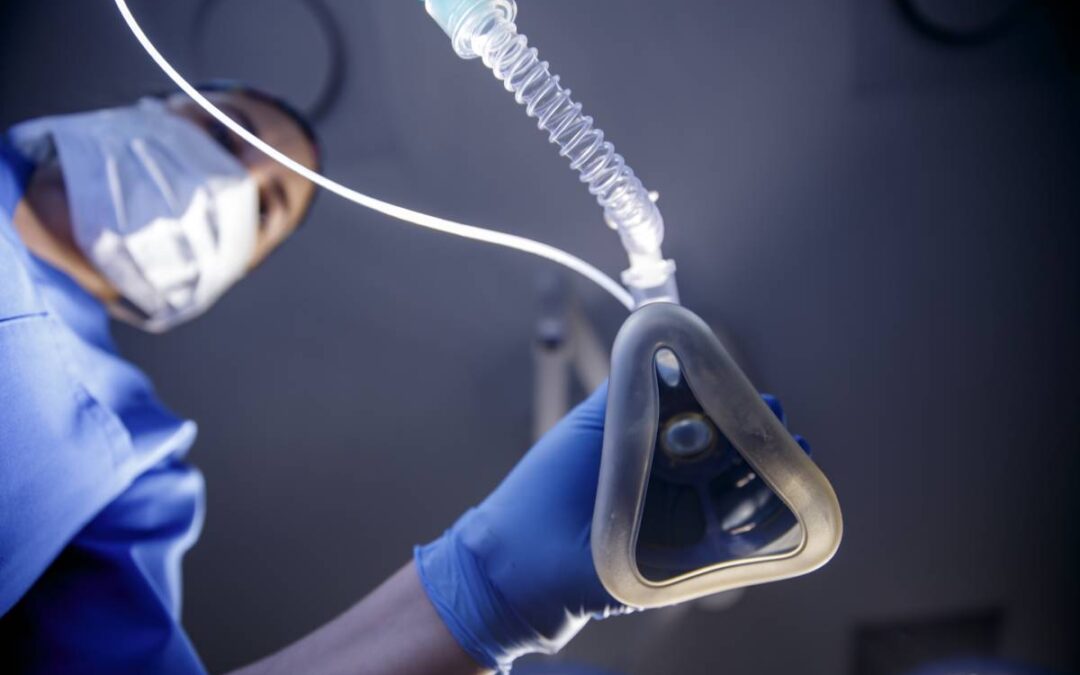
Malignant hyperthermia is a rare but potentially life-threatening complication of anesthesia. It occurs in susceptible patients when certain anesthetic drugs cause abnormal calcium release within skeletal muscle. This leads to a rapid increase in metabolism, with signs such as rigidity, acidosis, tachycardia, and rising body temperature. If not recognized and treated quickly with dantrolene, the condition can be fatal. To prevent malignant hyperthermia, anesthesiologists must avoid known triggering agents and instead use anesthetics that are considered non-triggering.
The main triggers of malignant hyperthermia are well defined, consisting of volatile inhaled anesthetics and the depolarizing muscle relaxant succinylcholine. These drugs directly interfere with calcium control in muscle and can rapidly provoke a crisis. By contrast, a broad range of other anesthetic agents are regarded as non-triggering, meaning they have not been shown to activate the abnormal processes underlying malignant hyperthermia. Reliably choosing from this group of safe options is the key preventive step in managing susceptible patients 1,2.
Most commonly used intravenous anesthetic drugs do not trigger malignant hypothermia and are widely regarded as safe. These are routinely used for both induction and maintenance of anesthesia in susceptible individuals without incident. Depending on the clinical situation, however, different agents can provide sedation, hypnosis, or analgesia while avoiding known triggers. These medications primarily act within the central nervous system rather than directly on muscle, which explains their favorable safety record in this context 1,3,4.
In general, opioid medications used for pain relief do not appear to cause malignant hyperthermia and remain essential components of anesthesia care. Likewise, non-depolarizing neuromuscular blocking agents, which are commonly used to relax muscles during surgery, are considered safe alternatives. Succinylcholine, a depolarizing agent, must always be avoided in patients with known risk of this condition 1,2,5.
Local anesthetics have been found to be non-triggering. This makes regional anesthesia techniques, such as spinal, epidural, or peripheral nerve blocks, safe in vulnerable patients. These methods can reduce or even eliminate the need for general anesthetics. When feasible, regional approaches provide an additional layer of safety by avoiding potential exposure to volatile agents altogether 1,2,2,6,7.
In practice, anesthesia for patients with known or suspected susceptibility to malignant hyperthermia often relies on total intravenous anesthesia, combined with non-triggering analgesics and muscle relaxants. Additionally, an essential precaution is preparing the anesthesia machine to remove residual traces of volatile agents if it is needed for oxygenation and ventilation. Equally important is ensuring that dantrolene is immediately available and that staff are trained to recognize and treat a crisis without delay 1,5,7,8.
While malignant hyperthermia is a serious anesthetic emergency, it is also highly preventable. By carefully avoiding triggers and using the wide array of non-triggering anesthetics available, like intravenous agents, opioids, non-depolarizing relaxants, and local techniques, safe anesthesia can be delivered to susceptible patients. With preparation, vigilance, and the right choice of drugs, the risk of malignant hyperthermia can be effectively managed.
References
- Watt, S. & McAllister, R. K. Malignant Hyperthermia. in StatPearls (StatPearls Publishing, Treasure Island (FL), 2025).
- Hopkins, P. M. Malignant hyperthermia: pharmacology of triggering. Br J Anaesth 107, 48–56 (2011). DOI: 10.1093/bja/aer132
- Safe and Unsafe Anesthetics – MHAUS. https://www.mhaus.org/healthcare-professionals/be-prepared/safe-and-unsafe-anesthetics/.
- Nimmo, A. F. et al. Guidelines for the safe practice of total intravenous anaesthesia (TIVA). Anaesthesia 74, 211–224 (2019). DOI: 10.1111/anae.14428
- Rüffert, H. et al. Consensus guidelines on perioperative management of malignant hyperthermia suspected or susceptible patients from the European Malignant Hyperthermia Group. British Journal of Anaesthesia 126, 120–130 (2021). DOI: 10.1016/j.bja.2020.09.029
- Brownell, A. K. & Paasuke, R. T. Use of local anesthetics in malignant hyperthermia. CMAJ 134, 993–994 (1986).
- Gupta, P. K., Bilmen, J. G. & Hopkins, P. M. Anaesthetic management of a known or suspected malignant hyperthermia susceptible patient. BJA Educ 21, 218–224 (2021). DOI: 10.1016/j.bjae.2021.01.003
- Wappler, F. Anesthesia for patients with a history of malignant hyperthermia. Curr Opin Anaesthesiol 23, 417–422 (2010). DOI: 10.1097/ACO.0b013e328337ffe0


Recent Comments